top of page


Guillermo Fernández
Instituto de Ciencias del Mar y Limnología, UNAM
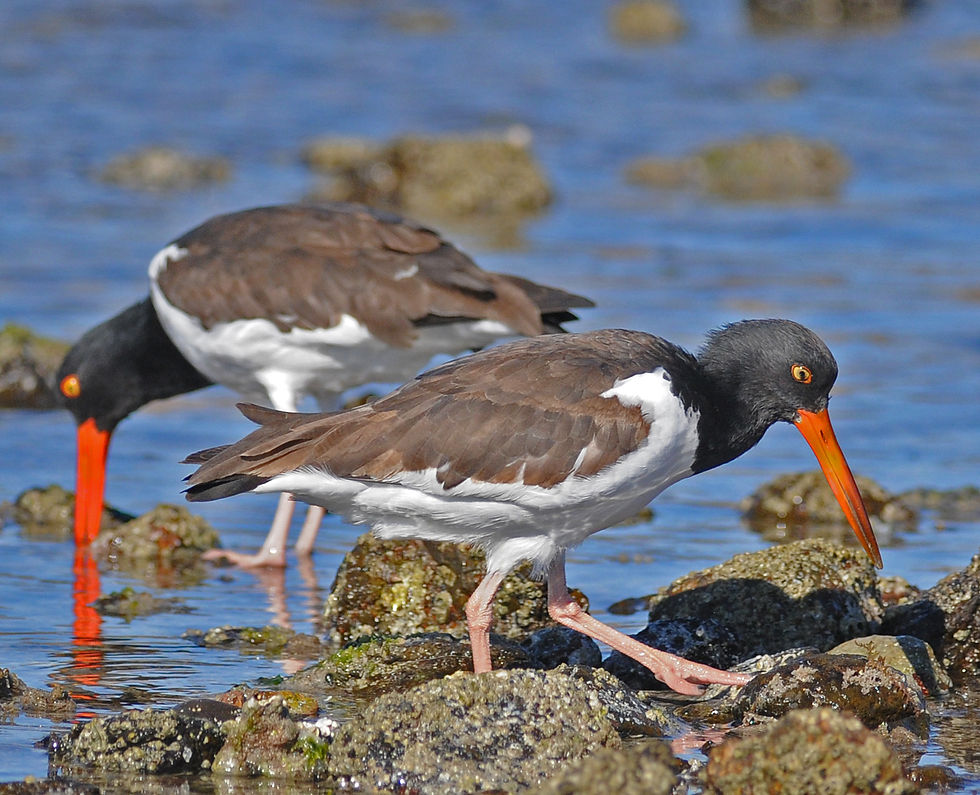
Guillermo earned his B.S. in Marine Biology from UABCS (1993), an M.S. from CICESE (1996), and a Ph.D. from SFU (2005). His interests center on avian ecology, particularly the breeding, non-breeding, and foraging behaviors of birds in coastal wetlands, and on how recent landscape changes might affect their populations. He have experience in shorebird research and conservation across the Western Hemisphere, including national and international initiatives such as the development of the Mexican Shorebird Conservation Plan, the Hemispheric Council of the WHSRN, and the Western Hemisphere Shorebird Group. His research covers topics such as the life histories of Western Sandpipers, the distribution of local non-breeding habitats, contaminant loads in shorebirds, shorebird habitat use in human-altered environments, and the population dynamics of the American Oystercatcher along the coast of Sinaloa. These studies have broadened the understanding of shorebird ecology in Latin America. He have published 65 scientific papers and mentored postdocs, graduate students, and undergraduates.
"From Chametla to Bahía Santa María: my experiences with shorebirds"
Image: Steve Mlodinow


Diana
Hamilton
Mount Allison University
"Ecology and conservation of Semipalmated Sandpipers (Calidris pusilla) and other shorebirds during southbound migration in Atlantic Canada"
Diana Hamilton is a biology professor at Mount Allison University in Sackville, New Brunswick, Canada. She started working on shorebirds more than 25 years ago with a focus on Semipalmated Sandpipers in the Bay of Fundy. Since then, she has studied interactions between shorebirds and their environment during southbound migration in Atlantic Canada. Her dual focus on shorebirds and their prey communities has allowed her to quantify changes over time, measure threats, and support conservation action for birds and their habitat. She enjoys a long-standing collaboration with Canadian Wildlife Service colleagues and prioritizes student-centred research. She will present an overview of past and ongoing shorebird work being done in her lab.
Image: Steve Mlodinow


Brad A.
Andres
"Twenty Years of the Western Hemisphere Shorebird Working Group — Consistencies, Growth, and a Perspective for the Future"
Brad recorded his first bird observation when he was 14 years old in the backyard of his Pennsylvania home. From there, he went on for an undergraduate degree in biology from The Pennsylvania State University, focusing on wildlife ecology and management. Brad’s interest in birds, and particularly shorebirds, led to Masters and Ph.D. pursuits at the Ohio State University, where he worked on migratory shorebirds in the Arctic Alaska and breeding Black Oystercatchers in south-coastal Alaska. After graduate school, Brad took a position with the Anchorage, Alaska, Migratory Bird Office of the U.S. Fish and Wildlife Service, where he led field research and monitoring projects on and coordinated collaborative conservation efforts for landbirds, shorebirds, and loons. In 2001, Brad became the first full-time coordinator of the U.S. Shorebird Conservation Plan, where he reminded until his retirement in 2022. As the National Coordinator of the U.S. Shorebird Conservation Partnership, he helped develop and implement national and flyway-scale science and conservation efforts for shorebirds. Over the last decade of his working career, he focused a lot of effort on the issue of shorebird harvest. Beyond paid positions, Brad has worked to strengthen the impact of non-profit bird conservation organizations and is currently president of Laramie Audubon Society. He continues to be involved with shorebird working groups and has bolstered his life list to 3,302 bird species. In addition to birding, he enjoys playing guitar, attending jazz concerts, traveling internationally, fishing, and hiking.
Image: Steve Mlodinow


Carmen
Espoz
Universidad Santo Tomás
"Science, alliances and management for the conservation of Calidris canutus rufa and other shorebirds: Bahía Lomas (Tierra del Fuego, Chile)"
Carmen Espoz is a Marine Biologist with a Ph.D. in Biological Sciences specializing in Ecology. She is currently the Dean of the Faculty of Sciences and Director of the Bahía Lomas Center at Santo Tomás University (Chile). Her work has focused on the ecology and conservation of migratory shorebirds and coastal wetlands, with a particular emphasis on Bahía Lomas, one of the most important wintering sites for Calidris canutus rufa. For over two decades, she has led research, monitoring programs, and conservation efforts that integrate science, management, education, and collaboration with public agencies, non-governmental organizations, and international networks. Her work has contributed to strengthening the protection and management of this site, which is internationally recognized for its importance to migratory shorebirds in the Western Hemisphere.
Image: Steve Mlodinow
bottom of page